Hydroforming for liquid cooling components

Custom Data Center Liquid Cooling Piping Components

ShuiYiYuan supports build-to-print hydroforming work for stainless steel press-fit pipe components, stainless steel or copper manifold components, and stainless steel tubing used inside liquid-cooled servers.

ShuiYiYuan manufactures the hydroformed component or tube section and can support tooling, tryout, and repeat production. Complete piping systems, CDUs, cold plates, connectors, and on-site integration are outside this service.

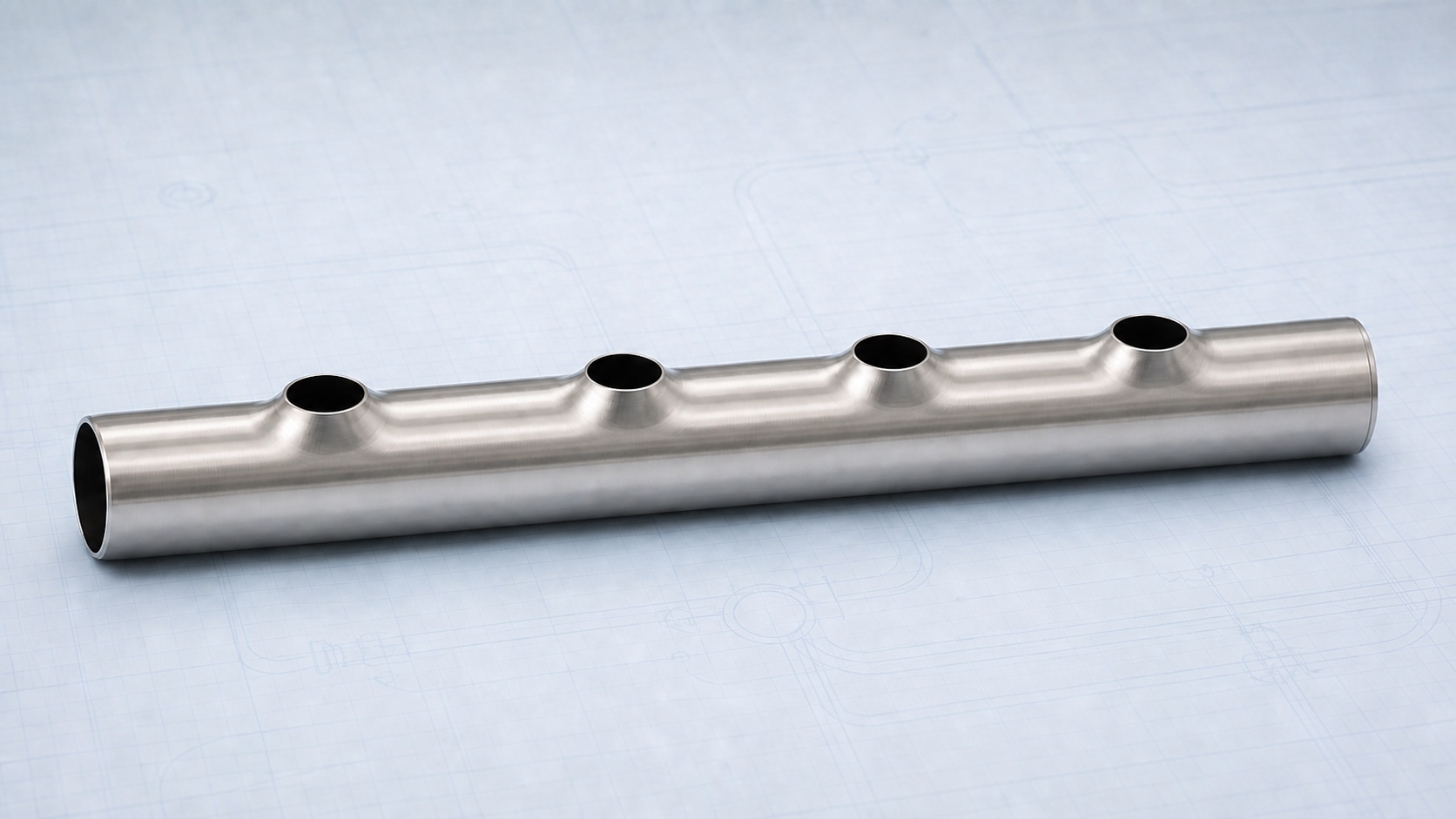
Engineering illustration of a stainless steel manifold header core with four shallow formed interface seats and openings
Manifold header-core engineering illustration; not a customer product or completed liquid cooling system.
Three component familiesPress-fit pipe components, manifold components, and server coolant tubing.
Tooling and tryoutForming-route review, die development, physical parts, and sample confirmation.
Contract hydroformingA defined forming stage within the customer’s wider manufacturing route.
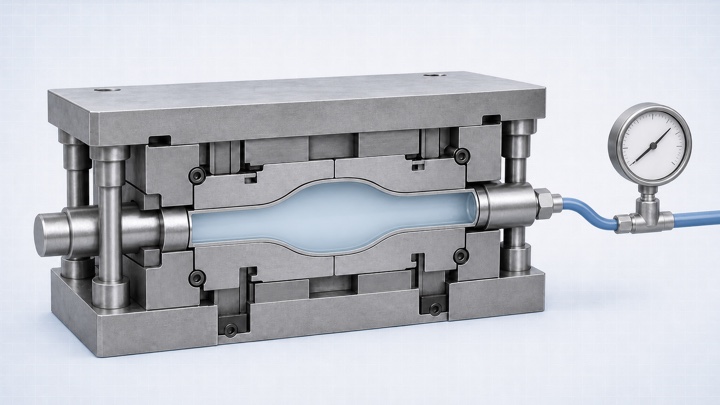
In-process pressure observationThe blank is fluid-filled and pressurized inside the die; an agreed hold can be used to observe leakage during the forming cycle.

Component families

Three liquid cooling piping component families

ShuiYiYuan has production or delivery experience with all three component families. Send your drawing or sample to review the hydroformed features, tooling, tryout, and repeat-production requirements. The images below are engineering illustrations.

Engineering illustration of a stainless steel press-fit pipe component with one formed bead near each open circular end
01

Stainless steel press-fit pipe components

Tube sections can be reviewed where the drawing requires a local diameter change, section transition, or formed interface. Press connection assembly, seals, tools, and the complete piping system are not included automatically.
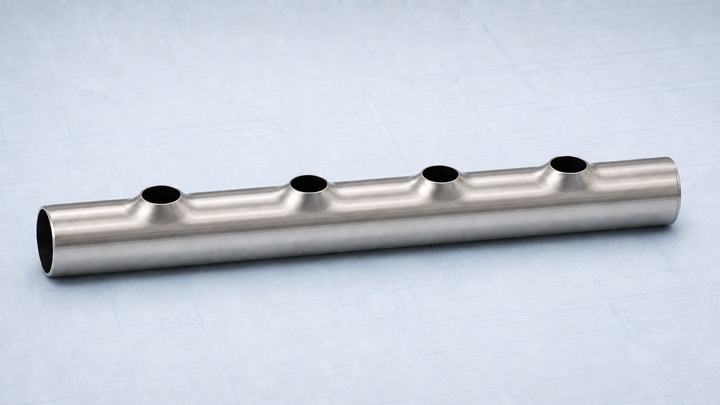
Engineering illustration of a stainless steel manifold header core with four shallow formed interface seats and openings
02

Liquid cooling manifold components

Stainless steel or copper hollow parts can be reviewed where local expansion, section change, or interface geometry may be suited to hydroforming. Port joining, welded assemblies, and flow-system design are separate scope decisions.

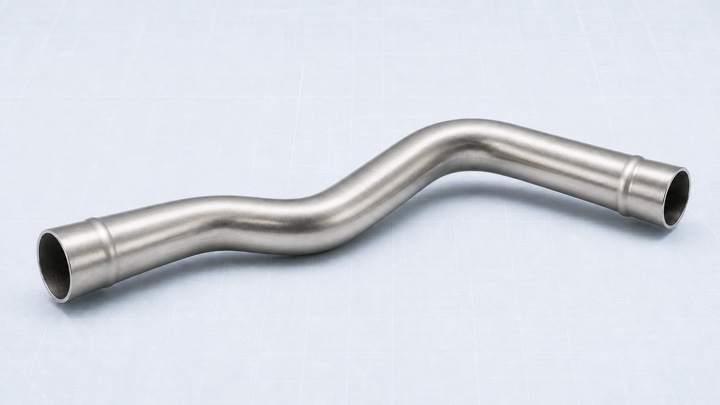
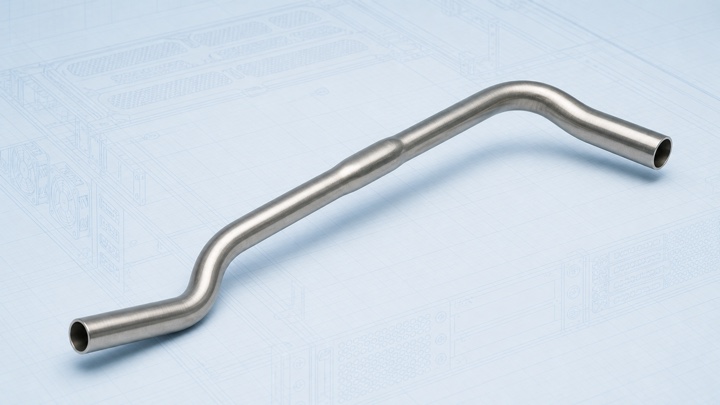
Engineering illustration of stainless steel server coolant tubing with a three-dimensional route and a controlled local section transition
03

Stainless steel server coolant tubing

Metal tube sections used inside a server chassis or cold-plate loop can be reviewed around a controlled local section transition and the required interfaces. Final routing, connectors, and server assembly follow the customer drawing.

Service boundary

Hydroformed components, not complete cooling systems

You provide the drawing, material, starting condition, and required delivery state. ShuiYiYuan then quotes the hydroforming work, tooling, samples, and any confirmed supporting operations separately from the complete cooling system.

01 · YOU PROVIDE

Drawing, material, and starting tube

Send the current drawing, material, starting tube or preform, critical interfaces, quantity, required delivery state, and any special requirement for pressure hold or leak observation during forming.

02 · WE FORM

Tooling and hydroforming

ShuiYiYuan completes the quoted route review, die development, tryout, hydroforming work, sample parts, and repeat production.

03 · YOU RECEIVE

The agreed component state

Receive the formed core, an agreed post-processed part, confirmed samples, or repeat parts made against the released drawing revision.

Included only when the project confirms itDeep drawingLaser cuttingAssembly and value-added supportEquipment and tooling customization

Engineering review

What we need to assess your component

The review connects the required hydroformed geometry with the material, starting tube, interfaces, quantity, and any in-process pressure-hold or leak-observation requirement.

01

Target hollow geometry

Identify the local expansion, section change, or other hollow feature that the forming operation must create.

02

Material and input condition

ShuiYiYuan’s current hydroforming capability covers starting tubes and blanks with wall thicknesses from 2 to 6 mm, inclusive. The specified grade, material condition, tube dimensions, seam condition, and any preforming are reviewed with the part geometry.

03

Interfaces and delivery state

Show press-fit zones, port locations, trim, later connections, and the required incoming and delivered conditions on the drawing.

04

Quantity and process checks

Sample quantity, expected repeat volume, and any agreed pressure hold or leak observation during forming shape the tryout and production plan.

Confirmed material familiesPress-fit components · stainless steelManifold components · stainless steel or copperServer coolant tubing · stainless steel

Samples, production, and process checks

From tryout samples to repeat production

Tryout samples confirm the agreed part state and interfaces, while repeat production follows the released drawing and input condition. Hydroforming itself fills and pressurizes the blank, and the forming cycle can include an agreed pressure hold for leak observation.

Engineering cutaway illustration of a fluid-filled tube blank expanding inside a closed hydroforming die
Engineering illustration of internal fluid pressurization and forming-pressure monitoring during hydroforming; not an actual machine photograph, post-forming pressure test, or pressure certification.
01

Samples and released production

Tryout parts confirm the agreed shape, critical dimensions, interfaces, and delivered condition. Repeat processing uses the released revision and confirmed input.

02

Pressure observation during the forming cycle

During hydroforming, liquid pressure expands the sealed blank against the die. When agreed, the cycle can include a pressure hold and observation for leakage. The part must remain intact under the internal pressure of that forming cycle, but this is not a separate qualification of rated working pressure, burst performance, or the complete cooling system.

Related services and RFQ guides

Continue with service scope, drawing inputs, and project cost

These pages explain the core hydroforming service and the information that normally enters an early engineering and quotation review.

Start a liquid cooling component project

Send the part data and define the hydroforming stage

ShuiYiYuan reviews the target geometry, material, starting tube, interfaces, quantity, delivered condition, and any in-process pressure-hold or leak-observation requirement before defining tooling, samples, or repeat production.

Information to include with your RFQ
  • 2D drawing, 3D model, or sample information
  • Material and starting tube or preform condition
  • Critical dimensions, interfaces, and required delivery state
  • Prototype quantity and expected production volume
  • For an in-process pressure hold, state the required hold time and acceptance criteria; identify rated-pressure, burst, or system-qualification requirements separately
Send liquid cooling component details